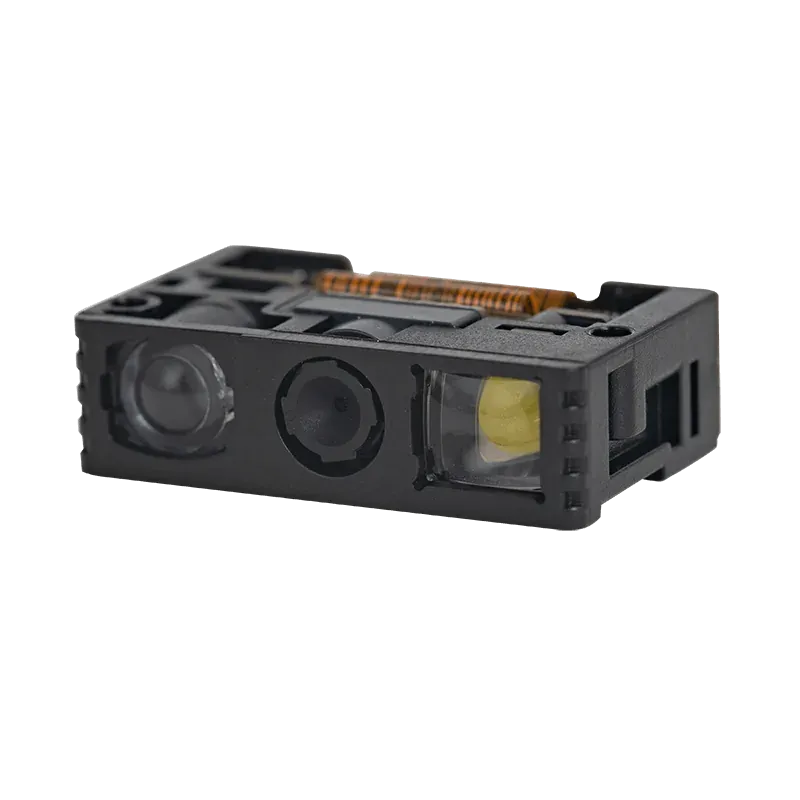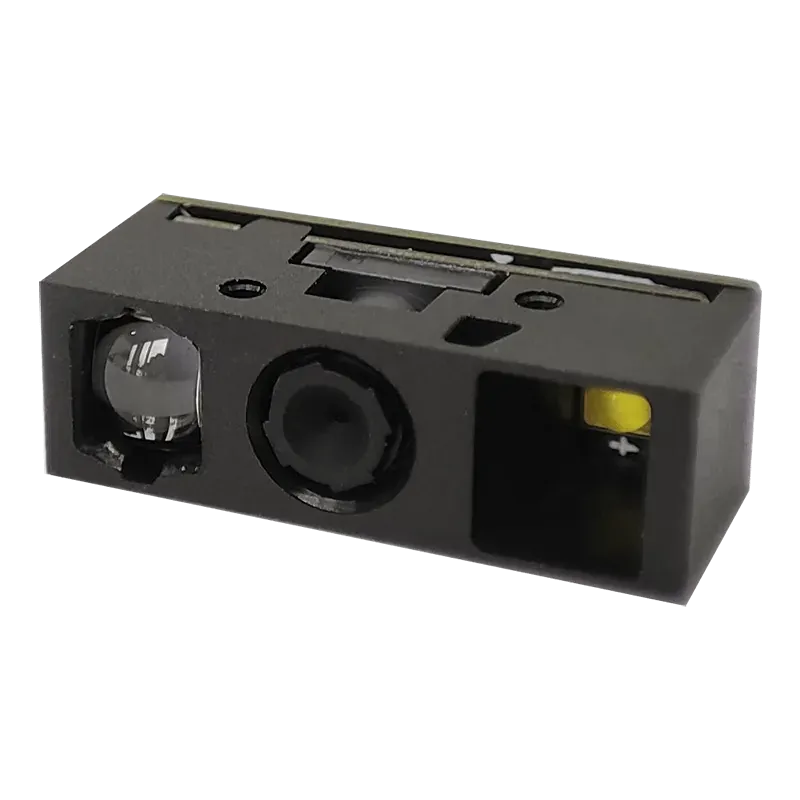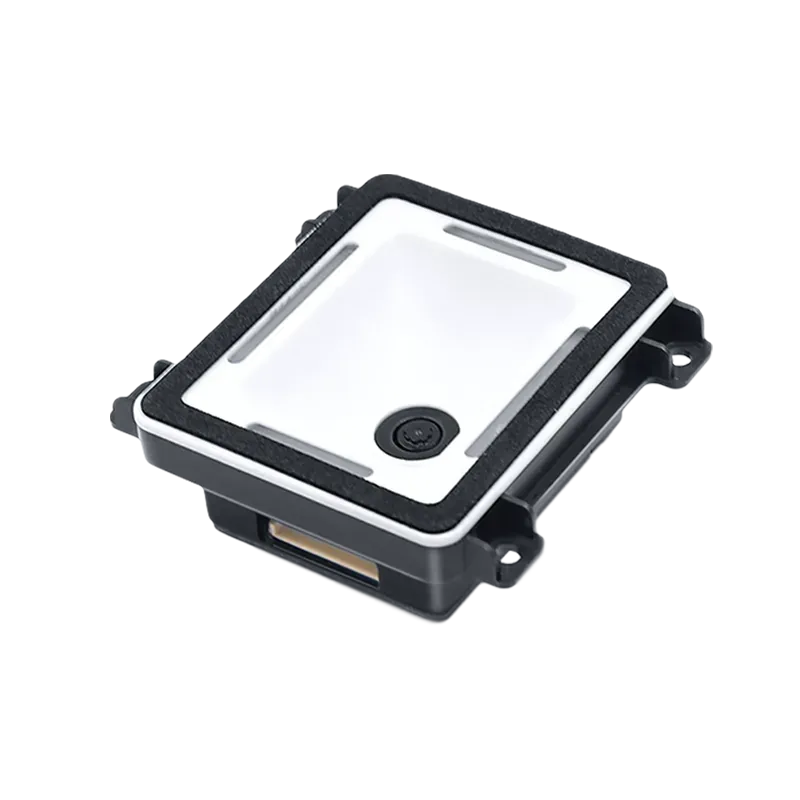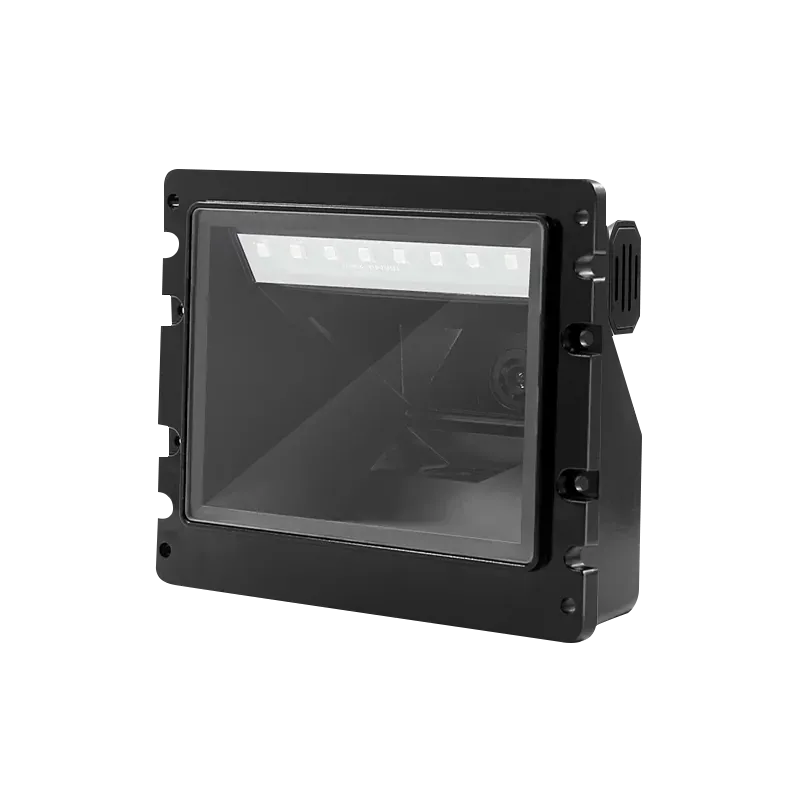
If you are designing a handheld terminal, kiosk, access gate or vending machine, built-in barcode scanning is often a must. The choice of scan engine affects reading performance, size, power and integration effort. These are the main questions to answer.
Scan engine or scan module?
- A scan engine is a small imager — often only a few grams — that you build into your own device and connect to your main board, usually through MIPI. It is the right choice for handhelds, tablets and compact devices. Examples: SD10, SD20, SL20, TD13, TL13, T20 and T40.
- A scan module is a complete reader with its own decoder and housing. It connects over USB, RS232 or other standard interfaces, so it is quick to install in kiosks, lockers, gates and machines. Examples: DM48, DM95, DM80 and DKP301.
Resolution and reading range
Higher sensor resolution lets the engine read smaller, denser codes and read from further away.
- 640 × 480 sensors are ideal for everyday 1D and 2D codes at short to medium range.
- 1200 × 800 or 1280 × 800 sensors read high-density codes and long distances, which helps in logistics and industrial use.
Check the depth-of-field table in each datasheet for the code sizes you actually use.
Shutter, illumination and aimer
A global shutter captures sharp images of moving codes. White illumination works well for both paper labels and phone screens. The aimer — red LED, red light bar or laser — shows the user where to point; a laser aimer is easier to see in bright light and at long range.
Field of view
A wide field of view, like the DM48, is helpful when users present codes at different positions — for example at a ticket gate or a kiosk. A narrower field of view concentrates resolution for longer reading distances.
Interfaces and software
Confirm the interface your board supports (MIPI, UART/TTL, USB HID or USB virtual COM, RS232, RS485 or Wiegand) and ask for the SDK and decoding library for your operating system.
Environment
For outdoor or industrial use, check the operating temperature, ambient light tolerance, drop specification and — for modules — the IP rating.
Need help selecting or customising a scan engine? Our engineers support OEM integration from the first sample to mass production. Contact us.